










Bluff in Poker: Definition, Meaning, and How Bluffing Works
What Is a Bluff in Poker?
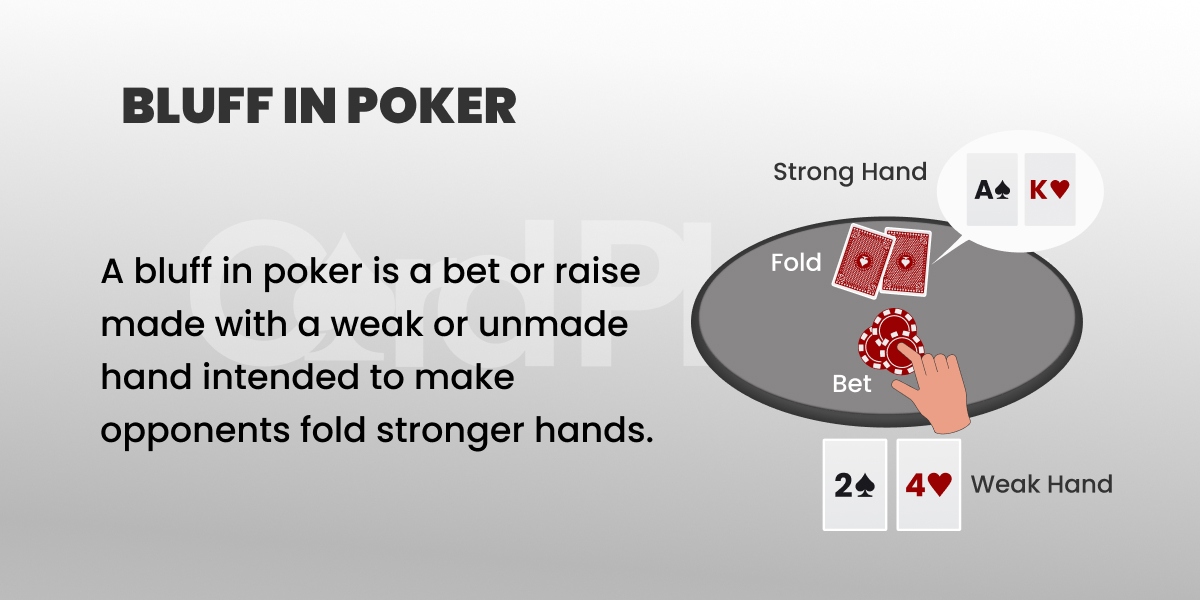
A bluff in poker is when a player bets or raises even though they have a weak hand. At its core, the bluff definition is about representing strength when your actual hand is weak.
You’re representing a strong hand to pressure your opponents into folding. If they fold, you win the pot without a showdown. If you bet big, you’re signaling to your opponents that they should fold.
If they believe your story and throw their cards away, your poker bluff worked perfectly.
Bluff in Poker: Key Points
- A bluff is a bet or raise made with a weak hand to make opponents fold stronger hands.
- Bluffing helps disguise your real hand strength and keeps your play unpredictable.
- Successful bluffs depend on timing, board texture, and opponent tendencies.
Pure Bluff vs. Semi-Bluff
Knowing how to bluff in poker is important, and there are a couple of different ways to do it. As you see below, the bluff meaning also depends on the situation.
- A pure bluff is a bet or raise made with a hand that has little or no chance of improving if called. You are relying entirely on your opponent folding.
- A semi-bluff is a bet or raise made with a weak hand that still has the potential to improve into a strong hand, such as a straight or flush draw.
Many players prefer semi-bluffs because they offer more than one way to win the pot.
Types of Bluffs in Poker
There are many different types of bluffs in poker that you will see as you play more.
- One common bet is a continuation bet. This is when you raised before the flop. Even if those cards did not help you, you bet again anyway. It makes it look like you’re still strong. It’s a very natural way to keep the pressure on.
- Another type is the bluff shove in poker, where you go all in with a weak hand to apply maximum pressure. Your opponent must decide whether to risk their entire stack just to see if you are bluffing.
Each bluff type works best in different situations, so choosing the wrong one for the table dynamics or stack sizes can turn a profitable move into an expensive mistake.
When to Bluff in Poker
When to bluff in poker depends on the right timing and reading the table. This is especially true on online poker sites, where fewer players in the hand and clear board textures make well-timed bluffs more believable:
- You should usually try to bluff when there are only one or two people left in the hand. It’s much harder to make five people fold at the same time because the odds are high that at least one of them actually has a good hand. If the table is quiet and everyone seems unsure, that might be a great time to strike.
- You also want to look at the cards on the table. If the cards are scary, like three cards of the same suit, it’s easier to convince people you have something strong. In games without physical tells, bluffing relies far more on bet sizing, timing, and board texture. It’s more difficult to spot a bluff online, especially against skilled players.
The strongest bluffs are made when your betting line logically matches the story the board is telling, making your action believable based on previous streets.
When to Avoid Bluffing
There are definitely times when you should just keep your chips in your stack:
- If you’re playing against a calling station, which is a player who calls every single bet no matter what, do not bluff them. You cannot trick someone who refuses to fold. They will just call you with a mediocre hand and take your money while you’re sitting there with nothing.
- Also, avoid bluffing if you’re feeling frustrated or on tilt. New players often try to bluff just to win back money they lost in the last hand. This is usually pretty obvious to everyone else.
- If your heart is racing and you’re just clicking buttons because you’re mad, your bluffing attempts will probably fail. It’s better to stay calm and wait for a better spot.
If your opponent’s calling range is wide or your bet does not meaningfully threaten their stack, bluffing loses its leverage and becomes negative-EV.
Semi-Bluffing Explained
In poker, semi-bluffing means betting or raising with a drawing hand – one that is not currently strong, but has the potential to improve to a powerful hand, such as a straight or a flush.
When you semi-bluff, there are two ways you can win the pot. If your opponent folds, you win immediately. If they call, you still have equity, meaning you can improve to the best hand on a later street.
This dual win condition makes a semi-bluffing strategy generally stronger than a pure bluff, where you have no realistic chance of improving if called. By using drawing hands in your bluffing strategy, you apply pressure while still giving yourself multiple ways to win the pot.
Common Bluffing Mistakes
Even the best players make mistakes when they try to pull one over on their opponents. It takes practice to get the feel of it:
- Bluffing too often is the biggest mistake because people will stop believing you very quickly.
- Betting a tiny amount that does not actually scare anyone into folding is just throwing money away.
- Ignoring the size of the pot can lead to a bluff shove in poker that risks way too much money to win a very small prize.
- Not thinking about what cards your opponent might have based on how they played earlier in the hand.
Most bluffing mistakes come from ignoring context—effective bluffs depend on opponent tendencies, bet sizing, and whether your line makes sense given the action so far.
FAQs
What is a semi-bluff in poker?
A semi-bluff is when you bet with a hand that is currently weak but has a good chance to improve to a winning hand later, like having four cards to a flush.
When should you bluff in poker?
You should bluff when there are few players in the hand, your position is favorable, and the board texture makes it believable that you could have a strong hand.
How often should you bluff in poker?
You should not do it all the time. If you do it too much, people will catch on. It should be a surprise move, not something you do every single hand.
What is a bluff shove in poker?
A bluff shove is when you go all in with all your chips while holding a weak hand to force your opponent to make a very difficult decision for their entire stack.
How do you spot a bluff in poker?
Spotting a bluff takes experience. Look for inconsistencies in betting patterns, bets that do not align with the board texture, or actions that do not make sense for the range a player is representing.
What’s the difference between a bluff and a value bet?
A bluff tries to induce a fold, while a value bet is when you have a great hand, and you actually want the opponent to call you, so you win more money.
Can you bluff too much in poker?
If you’re always bluffing in poker, you become predictable. The best players mix it up so their opponents never know if they are telling the truth or lying.