



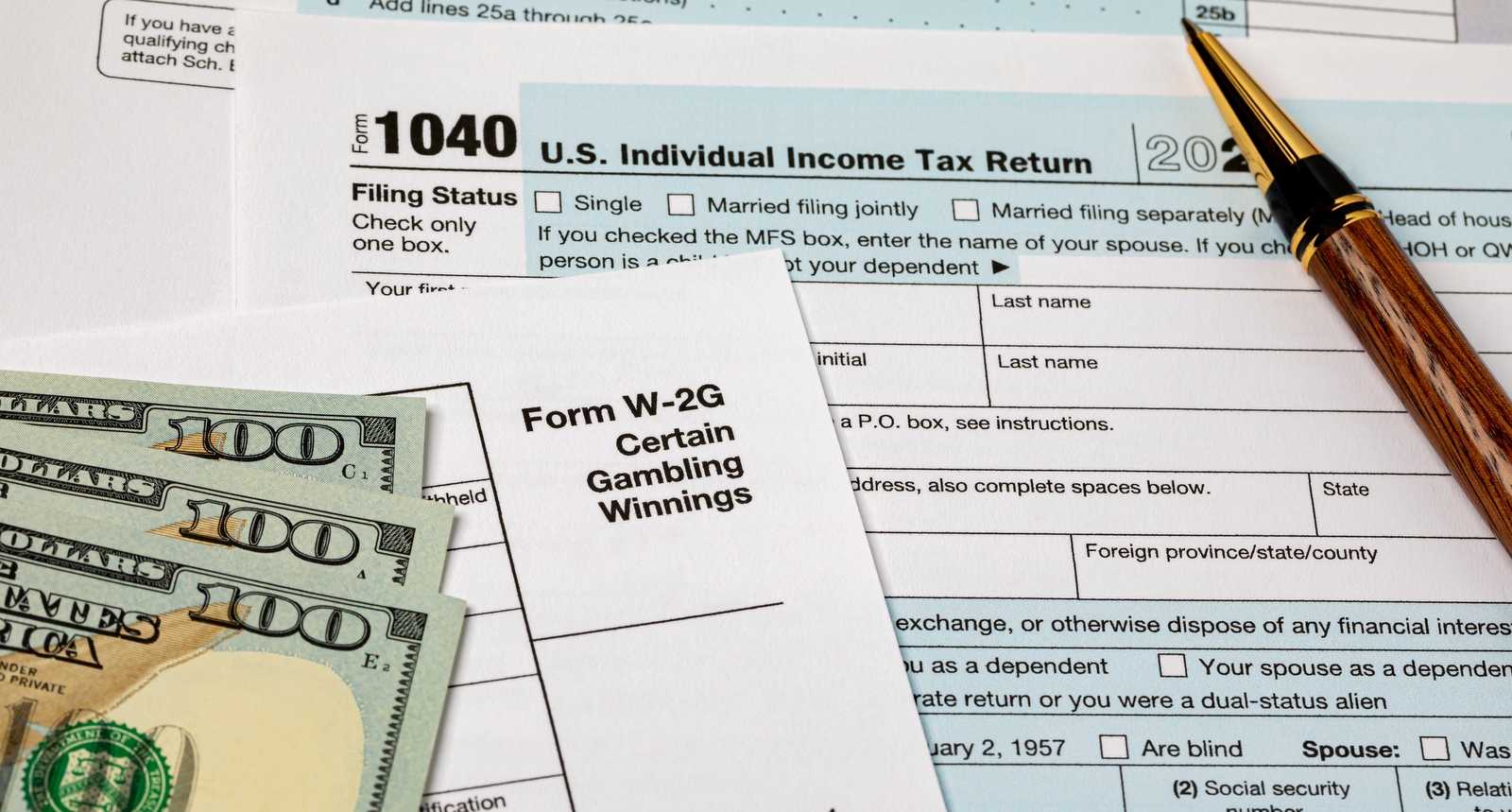
Efforts to roll back the gambling tax provision in the One Big Beautiful Bill Act received additional bipartisan support.
Rep. Dina Titus, D-NV, announced that Rep. Tom Cole, R-OK, became a co-sponsor of her FAIR BET Act. The bill would revert the gambling tax code to its pre-2026 rules, allowing gamblers to deduct 100% of their losses. Cole is the Chairman of the House Ways and Means Committee, making him a key ally in passing the legislation.
The powerful committee is Congress’s chief tax-writing entity. Thus, it is responsible for all federal tax legislation, revenue-raising, Social Security, Medicare, unemployment, tariffs, and trade agreements.
“Exciting news for the FAIR BET Act and the gaming community,” Titus said of the development on X. She added that the bill would “rightfully restore the tax code for gamers. Nobody should have to pay taxes on phantom income. Let’s get this done.”
Tax Change Could Cause $10B Hit To Sports Betting Handle
The announcement comes after months of discussion among poker players, legislators, and those in the casino industry. The One Big Bill included a provision that allows gamblers to only deduct 90% of their losses from taxes, creating “phantom taxes” in the process, despite a gambler possibly having a losing year.
In December, Poker Hall of Famer and 10-time World Series of Poker bracelet winner Erik Seidel announced that the provision may put him into semi-retirement. Titus recently interviewed Seidel about the issue.
“I think it affects every state in the country,” Seidel said. “There are certainly casinos in most states, but there are also just professional gamblers and people that participate in gambling in every state. And so this is going to have a really big negative impact, and I’m surprised that it ever got through or was ever even an idea.
“Whoever heard of paying taxes on money that you haven’t earned. It seems totally un-American, and I don’t think there’s any precedent for it.”
I spoke with poker legend @Erik_Seidel about the negative impact of leaving the tax deduction for gambling losses at 90%.
Despite what some of my colleagues like @SenatorLankford believe, inaction will have serious, concrete consequences on the gaming industry and economy across… pic.twitter.com/GFnDBsXqvY
— Dina Titus (@repdinatitus) January 6, 2026
Despite bipartisan support for rescinding the provision, efforts so far have failed. In December, several casino executives met with House Ways and Means Committee Chair Rep. Jason Smith, R-MO, to share their concerns about the tax change, which went into effect on Jan. 1.
One study recently reported that the tax change will cause an $18 billion hit to annual sports betting handle.