









High Roller Espen Jorstad Joins The ‘Jungleman’ Podcast
Main Event Champ Talks Discipline, Ego, And Playing To Win

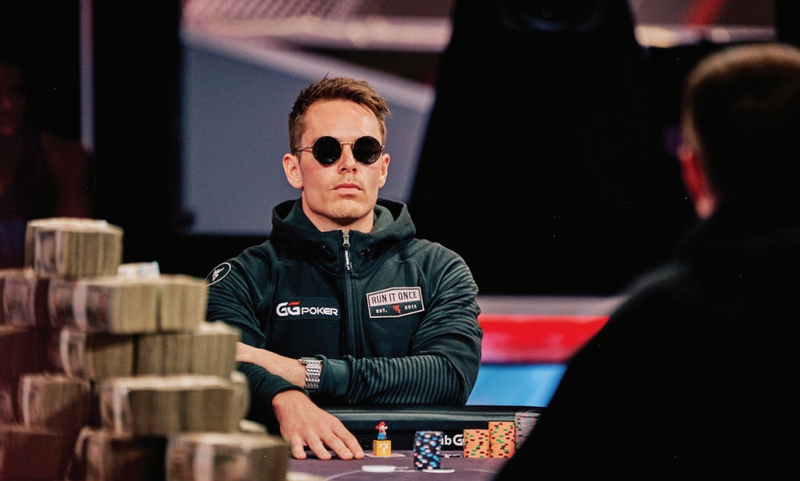
Fresh off a big third-place finish at Triton Poker Monte Carlo for $2.3 million, 2022 World Series of Poker main event winner Espen Jorstad recently joined the Dan “Jungleman” Cates Podcast to talk about his career and outlook on the game. Beyond the $10 million in main event winnings, the Norwegian poker pro has shown that he’s more than just a flash in a pan and now has totaled more than $18 million.
That included winning a €25,000 European Poker Tour high roller in December for $293,000. He also dominated the Triton London series in 2023, cashing four times, including three final tables and a win for a total of $3.925 million.
Although he emerged seemingly out of nowhere to win two bracelets and the main event in 2022, the 36-year-old had been playing poker since 2004. The former brewmaster (he has a master’s degree in brewing science from the University of Copenhagen) spoke with Cates about winning the big one, some main event tips, as well as his six-month wait for his $10 million.
He also offered some insight on going from being a video game addict to life in the Norwegian army, as well as success and ego. Check out the entire episode below or on YouTube, Spotify, Apple, and other platforms.
Espen Jorstad: I’ve been playing poker since 2004, but 2022 was the first time I played the main event, so I’m not really a main event specialist even though I won it. That’s obviously up to a lot of randomness and chance. I was close to busting on the first day as well. I had 17,000 or 18,000 after the first day. You start with 60,000 so I bagged less than a third of a starting stack after day one, and then I just spun it up on day two and maintained a big stack for the rest of the tournament.
Dan Cates: Can you tell us about changes between this and a high-stakes tournament that more aspiring poker pros can get a couple tips from?
Espen Jorstad: I have heard people have very different opinions. My approach is to be patient, take your time. Don’t get into high-volatility spots if you don’t have to because you just get gifted stacks throughout the tournament.
But then I know other people who have the approach that you should just try to build a big stack from the beginning, just so you can run over people. Because for a lot of people the main event is a milestone tournament.
They want to play it once in their life and they’ve been saving up or they qualified somehow. It’s a big deal and they don’t want to call their wife after three hours and tell them, ‘Yeah, I busted on day one.’ That’s not really what people want to do. A lot of people want to survive. They want to make day two, maybe make the money. So a lot of people’s approach is to try to build a big stack and then just run people over and exploit people who are trying to survive.
 Dan Cates: There are clearly really positive opportunities in the main. I’ve talked about this with some people, that you should [not be afraid to] get all in with queens, or even not folding queens preflop to A-K. It just reminded me of a dynamic in Squid Games, where people think (they need) to make giant raise sizes and things like that. Actually, it’s not the case. What you want to do is take a more conservative approach because you have to play lots of hands and generally just get in the pot.
Espen Jorstad: It’s a lot of limping and open limping.
Dan Cates: It’s not to make massive raise sizes and try to steal all the time, which would actually wildly screw you over, depending on how you’re doing it. Maybe the same principle applies in the main event. I actually try to play solid in main events preflop. I find it hard to justify opening loads of hands, unless people are playing insanely tight or just not fighting you.
Espen Jorstad: But also you’re a famous name in poker and people playing against you are going to think that you’re going to bluff a lot, you’re going to be three-betting a lot, and they expect you to be who you are. They’re also going to play versus you in a different way because they want a story to tell their friends back in Houston, Texas. ‘I bluffed Jungleman,’ or ‘I caught him bluffing. I made a hero call with ace high and he was bluffing.’
People love those stories if they play against famous players. But for the main event, I didn’t have the approach that I’m going to try to spin up a huge stack. I just played what I thought was ICM-aware, solid poker.
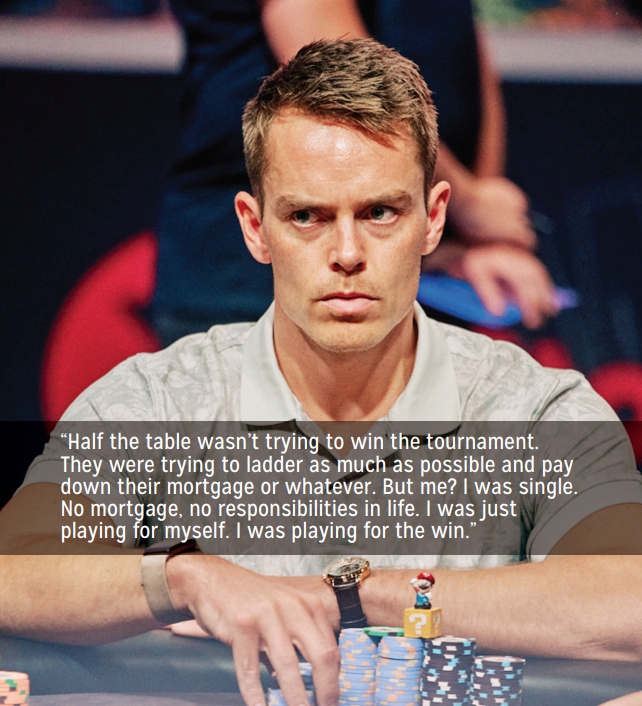
I was lucky enough with two tables left. I just got in aces versus A-K for a massive chip lead pot. So going into the final table, it was me and another guy who had the shared chip lead. At that final table, there were a lot of players who had big hopes of laddering. Half the table wasn’t trying to win the tournament. They were trying to ladder as much as possible and pay down their mortgage or whatever.
 But me? I was single. No mortgage, no responsibilities in life. I was just playing for myself. I was playing for the win. I was playing ICM poker, but I wasn’t nitting it up to make ladders. And going into the final table I was chip leader, I was able to bet people out a lot and just red line a lot.
Dan Cates: That’s always nice. The red line is the more fun way to win because it feels like you’re winning all the time. Whereas when you’re hoping for ladders, you feel like you’re getting screwed all the time, which might be what’s happening.
Espen Jorstad: There were some sick folds. I got sent some hands from that final table afterward and I was like, ‘Okay, what is going on here?’ People were playing very tight for most parts, which is very nice when you have the chip lead.
(He later spoke about a delay in getting the money for the main event victory.)
Espen Jorstad: I got it all in the end, but the IRS was refusing to accept my UK proof of residency. I didn’t have the proper certificate. I had a document from the government saying that Espen lives in London, but it wasn’t the official certificate of residency.
I could have taken out the money on day one after winning it, but I would have had a 30% withholding tax and reclaiming that could take a long time, they told me. So I decided I would rather wait and try to figure it out.
Dan Cates: That’s kind of salty. I would try to fight for that $2 million also.
Espen Jorstad: I just waited. But in a time where interest rates are decently high, it’s quite a bit of money – $10 million at 4% interest for half a year is worth like $200,000, so it does matter in the end. Having the money locked up just sitting there, it worked out in the end.
(Becoming a main event winner is a long way from playing video games and serving in the Norwegian army.)
Dan Cates: You joined the army at 18. I was pretty surprised by that, especially considering you were doing the opposite of joining the army, which is playing online poker.
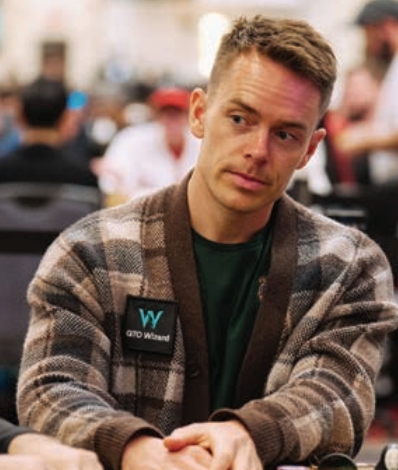 Espen Jorstad: Very much. I had no belonging in the army at all. I was the opposite of what you would think of as a soldier. I had no discipline at that point. I was over 100 kilos (220 pounds) and I had zero grams of muscle on my body. I’d never been in a gym. I spent most of the days in front of my computer playing World of Warcraft or poker. I was in very bad shape.
Socially, I was very awkward. I was a very different person back then. People have a hard time believing that it’s me if I show them pictures or videos because I was such a different person. The year in the army itself helped a lot because I learned a lot about discipline, and I was forced to grow up very fast – going from a very immature, lazy guy to basically having to wake up at 5 a.m. every morning to do a bunch of push ups and whatever nonsense they had us do.
(Finding so much poker success can mean having to keep one’s ego in check and Jorstad offered some insight on that struggle as well as trying to be unbiased in studying the game.)
Espen Jorstad: I don’t just like going into (a tournament) if I haven’t studied recently. It’s really a confidence thing. I’m kind of sensitive to that where if I have a period where I’m not working hard enough by my own standard standards, I feel like ‘What if I suck at poker now – on the feature table, and now my fragile ego is shattered?’
People have fragile egos for the most part and they want to think that they are good at the game. If the people that they are studying with are really bad, that means that they are probably also really bad. So by convincing themselves that their friends are really good, because you know what your friends are studying, you know their strengths, you know the stuff they’ve been working on and you know the stuff that they’re good at, but you might not be aware of all the weak spots they have.
But when you’re analyzing other crews or other players, you’re mostly focusing on their weak spots. Because that’s all that comes up in the group chats. You never see in a group chat someone posting, ‘Oh, this guy from this other crew just made a really good play.’ It just doesn’t happen that much. It’s usually, ‘Oh, my God, did you see what this guy did? He totally punted on the bubble.’
It’s usually those kinds of things that people tend to share and, in that sense, your brain is going to start to think that, ‘Okay, my crew is just more skilled than other crews,’ which is a really bad way to see the game I think.
Dan Cates: In poker, it’s not even really a good tendency. I wonder to what extent I’m guilty of this. I’d like to think I’m not as guilty as other people, but maybe I’m biased. I change my mind rather fast if I see information in the counter direction. I’m wondering how to get around it, but clearly it’s more beneficial to look at the things that people do well, or at least weigh them properly if you have to compete against each other.
I think a lot of this happens in various forms that are really bad overall for society. In poker, it’s a game where you get punished for these sorts of things if you’re too delusional. ♠
