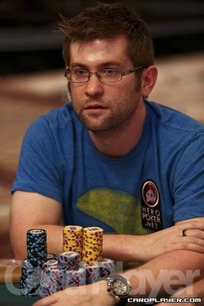
 People in the poker community often come up to me and ask about whatever is on their mind. Some of these questions are good questions, and some are bad beat stories in disguise. I’ve been through quite a few things in my poker career and I like to help whenever possible, and in this new Card Player series, I’d like to share my experiences and knowledge. Feel free to ask any poker-related question, and I’ll do my best to answer it in the space below.
Question: I have seen some buzz on social networking sites lately about this new TDA rule where you have to be in your seat when the first card is off the deck. What do you think of it?
Gavin: This is one rule change that doesn’t directly affect me much. I’m the type of player who stays in their seat almost the entire time from break to break. Occasionally I’ll get up and walk around, but I don’t wander too far from my table and usually am watching to see when the hand is finished.
I do have a friend or two who will be greatly affected by this rule change. The type of guy who is always out of his seat talking and walking around. Lobbying, some people call it. This type of person is going to have some of their habits changed, but overall, not a big deal. True, there have been some outcries of injustice on Twitter and Facebook, but is it really that important to someone that they are able to stay out of their seat for another 7 seconds to talk to their friends? I would argue that they won’t be as adversely affected as they think they will. In fact, I would argue that it will be a positive for them. They will be more focused on the tournament at hand because they won’t be up and about. They will be at the table, watching the action, picking up information, and possibly even engage with those at their table instead of people all around the room. That is, until they turn on their iPad.
Question: I have played a fair amount of limit Omaha eight-or-better cash games and have done well. I have decided to take a shot at an upcoming Omaha eight-or-better tournament and was wondering if you had any advice for me as I try to make the transition.
Gavin: In truth, there aren’t very many differences in O/8 tournaments and cash games, especially in the early levels. Your fundamental hand selection is still important and most of your post-flop play should look similar. You don’t really need to have any especially good short-handed skills until you get deep in the tournament, though it really does help once you do so. I’d say the main difference comes into play when the limits get higher and your stack gets short. When you have just a few bets left and flop something like a good low draw and no significant high hand or high draw, it might be better to take a free card and try to hit your low and perhaps pick something up for high backdoor than to try to bet and get yourself sucked in to trying to win half of a pot you bloated in the first place. Basically you’re giving up a little bit of hand range balance in order to preserve your stack a little better. In truth, players are considerably more aggressive in O/8 tournaments, especially the deeper you are in the tournament, than in your regular cash game so that gives you a little more incentive to slow down in those spots where you have a decent chance at getting half the pot but not much chance at scooping. Good luck and have fun in your first O/8 tourney.
Question: I have a friend who is deep in debt. He is a fantastic poker player but a terrible, degenerate gambler both in the pits and at the sports book. He has admitted to me that he has a gambling addiction, but it seems like the only way for him to get even is to keep playing poker. How does he stay away from the other temptations a casino can offer? Should he find another way to pay off his debts?
Gavin: Let me start by saying that I’m not a therapist or counselor but I have had friends with addiction problems so I’ll do my best to answer your question. In my opinion the first thing your friend needs to do is look for help from somewhere. He’s admitted to having a problem, which is good, but acknowledging a problem and doing something about it are two different things altogether. He can seek out a group like Gamblers Anonymous or even Alcoholics Anonymous if there isn’t a GA group near where you live. If he doesn’t want to get involved in something like that because of the group setting, perhaps he can begin seeing a therapist who specializes in dealing with addictions.
Once he’s seeking more outside help, remember that he came to you with his problem, be sure to encourage him on his road to recovery as much as you can. That may mean that the nature of your friendship changes. Instead of playing credit card roulette for the bill when you went out to dinner, now you should just split it. Instead of hanging out at the casino together, hang out at the park or go to a movie. Instead of betting on a round of golf, try to play just for the fun of the game. Little things like this are helpful to those in recovery and show them that you’re willing to sacrifice to help them with their problem.
As far as whether he should turn to other things besides poker to make money to pay back his debt, that’s something he’ll have to deal with when he talks to his counselors either in a group setting or one on one. He should consider self-barring from table games and sports betting at his usual casino and giving you or someone else he can trust the passwords to his online gambling sites.
Best of luck to you and your friend, recovery is a long road but it will improve his quality of life.
If you have a question for Gavin, send it to editor@www.cardplayer.com.