










Poker Face in Poker: Definition, Strategy & Tips
What Is a Poker Face?
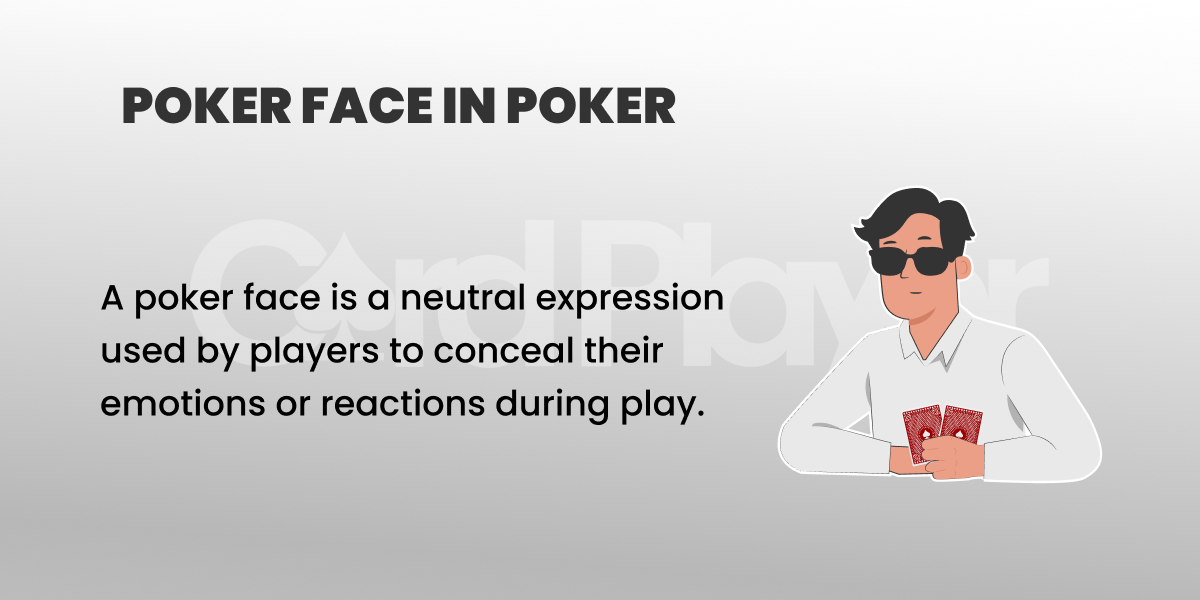
A poker face is a conscious decision to show zero emotion at the table, no matter what cards fall. The whole point is to kill information.
A good poker face is a vault. It locks your emotions away and gives your opponents nothing, and it’s one of your most valuable weapons in live poker.
Poker Face in Poker: Key Points
- A poker face is a blank expression. A mask that hides everything.
- You use a poker face to stop giving away information through visual tells.
- The poker face has become a famous symbol for staying cool under pressure.
History of the Term Poker Face
The poker face was born in the Old West. In dusty, dangerous saloons, showing weakness was a way to lose your roll, or worse, a way to get hurt. Players learned fast to hide their feelings behind a cold, steady gaze as a survival skill.
The name was too good to stay at the card tables. Soon, everyone was using it: politicians, generals, businessmen. Anyone who had to stay cool in a tough spot was said to have a “poker face.” The term has become a global metaphor for emotional control.
Strategic Importance of a Poker Face
Why does a poker face matter so much? Because live poker is a war of information.
Every player is hunting for clues. A shaky hand, a quick look at your chips. A tense jaw. These are tells; they are leaks. A real poker face gives the villains at your table nothing to work with. It leaves them guessing, and a guessing opponent is a paying opponent.
You just rivered the stone-cold nuts, and your opponent is betting into you. Inside, you’re a screaming mess of joy. On the outside? Nothing. A mask of boredom.
Are you betting because you have it, or because you want them to think you have it? If your face is a blank wall every single time, your opponents at the poker table will have much less of an idea.
Recognizing & Avoiding Common Tells
Recognizing and avoiding common tells is one of the hardest skills in poker. Your face is just the beginning.
You are leaking information from everywhere:
- The most common tell is shaky hands: The adrenaline from a big hand, bluff or not, can make you tremble. If you can’t control it, put your hands on your lap, hide them.
- Your eyes are traitors: Many players can’t help but glance at their chip stack the moment they connect with the flop, which is a dead giveaway.
- Staring down an opponent is another classic: It usually means weakness, an attempt to look strong.
- The real key isn’t what you do: It’s doing the same thing every single time.
Control your patterns, and you control the story your body tells.
Techniques to Develop a Strong Poker Face
A good poker face is built, not born. It takes practice.
Here are a few poker face tips to get you started:
- The first step is to build a routine. Try to find a default sitting position.
- Develop also a default way to hold your hands, and a default look on your face.
- Do this every single hand. Aces or rags. It doesn’t matter; the routine is the same.
- Breathing is your anchor. When the pressure is on, your breathing gets fast and shallow. Your opponents can see it. Focus on breathing slowly and deeply. It calms your nerves and hides your anxiety.
- If you’re still leaking, get a pair of sunglasses. They’re a classic for a reason: They hide your eyes.
Build your habits, control your breath, and your poker face will follow.
The Psychology Behind a Poker Face
Here’s the real secret. A poker face isn’t about acting, it’s about being. The best players are genuinely calm. They have detached themselves from the results of any one hand. They don’t ride the emotional rollercoaster you’re on anymore.
This comes from a deep, unshakable confidence in their game. They know that making good decisions is all that matters. The results of any single pot are just noise, luck, and variance. When you truly believe that, you don’t have to fake being calm; you simply are calm.
Poker Face in Culture & Media
The poker face is everywhere now. It’s bigger than the game; it is in movies, in songs. It’s a cultural icon. The ability to stand in a storm and not flinch.
A poker face is a life skill. Negotiating a raise, dealing with a crisis. The principles are the same. Stay calm. Don’t reveal what you’re thinking. Don’t let your emotions make your decisions for you. It all started at the poker table.
Relevance of Poker Face in Online Games
So what about online poker? No one can see you. Does your poker face matter? Yes. It just looks different. Your online poker face is your timing, your betting patterns, your online “identity”.
Do you bet instantly with the nuts? Do you take forever when you’re thinking about a bluff? These are timing tells. The sharks will eat you alive for them.
Take the same amount of time for every decision. Use the same bet sizes. Don’t type your bad beats in the chat box. The goal is the same: become a poker ghost.
FAQs
What does poker face mean in poker?
A poker face is a blank expression to hide your emotions and hand strength at the table. The meaning of a poker face is all about not giving away any information to your opponents.
How do I keep a poker face?
Practice a routine. Control your breathing. Stay calm on the inside.
Is a poker face the same as bluffing?
No. A poker face is the tool you use to make your bluffs believable.
Can my body give me away just like a bad poker face?
Yes. Shaky hands and where you look are dead giveaways. Your whole body is, in a sense, part of your poker face.
How do I practice my poker face?
Play low stakes and focus only on your physical actions. Watch yourself in a mirror.
Do all pro poker players have a poker face?
Most do. Some use a talkative, “open-faced” style to get reads, but that’s a very different, even more high-level skill, and even riskier to utilise without the experience or talent.