







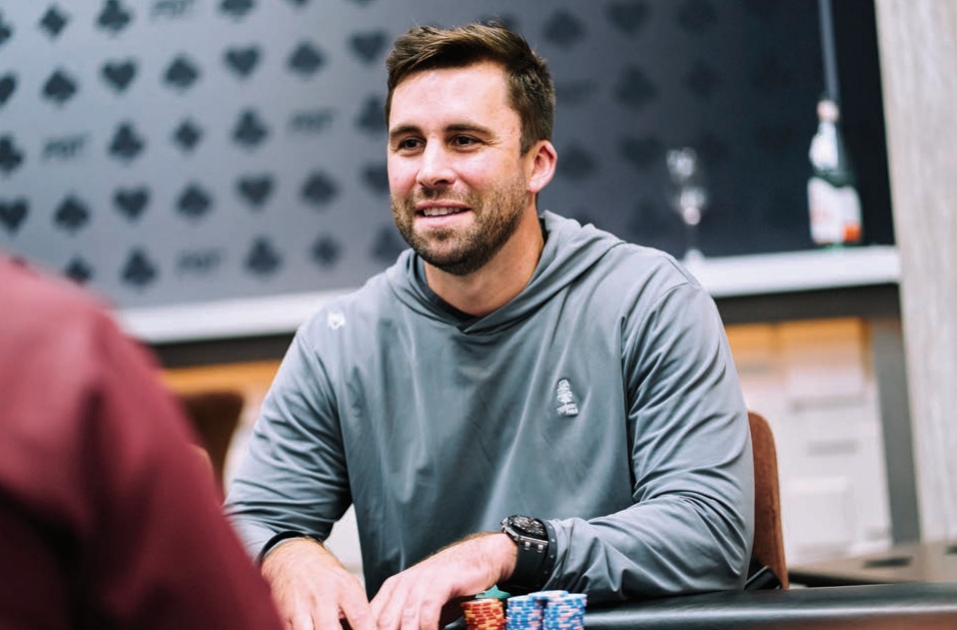
Life at the poker table has taken some interesting turns for John Andress. The Philadelphia native moved from esports into poker during his years at Penn State, eventually taking up the game full time. In the years since he has racked up $3.3 million in live tournament winnings.
There was a breakthrough win in 2011 in a European Poker Tour Prague event for $236,186. He continued to consistently find nice cashes and then recorded the biggest win of his career in 2017, taking down a $25,000 high roller at the Hard Rock Poker Open for $801,450. He was also a regular online, racking up big wins in both tournaments and cash games.
But his college-to-poker tale is a bit different from the typical poker boom story – his journey came with a twist. In 2018, Andress opted for a bit of a career change after moving to the Bay Area in California. He began working in security for A5 Labs, a 200-person tech team building AI that hunts bots and collusion across online poker. Instead of hitting the tables, he was now helping root out unscrupulous players, bots, and other unethical play.
Despite his role on the security side, Andress still makes it back to the tables at times. This summer, he had a deep run in a World Series of Poker Online $500 mystery bounty event for $105,420, and he made three final tables at the recent PokerGO Tour Bounty Blitz series in Las Vegas.
Andress was recently a guest on the Table 1 podcast and discussed his progression from esports to poker, the ups and downs of his early card-playing career, how a big score in a Puerto Rico casino helped build his bankroll, his transition to poker police, the work behind finding and banning cheaters, and more.
Keep reading for some of the highlights. You can also watch or listen to the entire episode on YouTube, Spotify, Apple, or any podcast app.
John Andress: I was big into video games, but I played football, basketball, lacrosse. I played lacrosse at Penn State. I definitely had that hyper-competitive side, although I feel like I’ve lost a little bit of that now. I also got really into Counter Strike and played competitively at a high level, pretty much until the end of sophomore year of college, which is when I found poker.
I started playing Counter Strike in middle school with my friends at a cyber cafe. I’m the type of person who gets obsessed with things, so I started playing a lot. I found all of the competitive platforms, met people in my area that were playing, and then there was a group of guys I came up with. But it all kind of came to an end. I think it was the summer after sophomore year, we drove down to this qualifier in Virginia and we placed in the top four. That got us into the World Cyber Games (WCG). But that was during the school year. One of my other teammates, he was a goalie at [his school], and he ended up playing for the [New Jersey] Devils. We were like, ‘What are we doing?’ and we all kind of just quit after that.
Justin Young: You guys qualified and just didn’t show up?
John Andress: Yeah, we didn’t really have a sponsor. Esports was so different back then. I think at the biggest tournament, the whole prize pool was $500,000. So, if you win with a team of five, we get like $100,000 each. Back then there were a few teams, a couple that are still around today, that had someone sponsor them, put them in a house they could practice. But even then, the European teams were so much better that if we went to this qualifier, we would just probably get wrecked anyway. You played in L.A., and then you went to Korea. We probably wouldn’t have even gotten through L.A.
Art Parmann: Did you find online poker?
 John Andress: That’s the other thing. I guess sophomore year I had a couple other friends that got me into poker. I had played poker once or twice before with friends. So, I learned a little bit through them and started playing. I was like, ‘This is like a video game you can actually make money in. Now I’m addicted to this – I don’t need to do Counter Strike anymore.’
Penn State actually had a lot of really good online players, like Jake Toole. I remember we were sweating him on Full Tilt, and he won an FTOPS (Full Tilt Online Poker Series) tournament for like $500,000 and that blew our mind. This kid was on the tennis team at Penn State, and he did drop out after that, but he ended up going back and getting his degree later.
Justin Young: You were going to school still, but were you just all in on poker basically?
John Andress: Kind of. I went on a vacation sophomore year with my buddy and his family to Puerto Rico. That’s the first time I went to a casino, and I only had a few hundred bucks to gamble with. I ended up hitting a three-card Royal Flush on Three Card Poker. So, I had $8,000 my parents didn’t know about, a secret bankroll. It was also good beer money.
I started depositing online, just playing casually. I think by the time I graduated, I probably had like $150,000. I told my parents that I was going to give it six months and if I wasn’t making money I’d start applying for jobs.
From June to August, I probably lost like 60% of that bankroll. I think it actually started with SCOOP (Spring Championship Of Online Poker). I never played tournaments that big, but I had all this money from cash and I started battling higher stakes, heads up. I was like, ‘This is going terrible.’ So, I went back home to my parents, took a break, and then started grinding again. It was going well.
I won a PCA (PokerStars Caribbean Adventure) seat. At this point, I didn’t really know anyone in poker other than my friends who weren’t pros. So, I went to PCA alone from a $700 satellite that I won, and I ended up cashing the tournament for $60,000. That kind of got me back into it, and then I just couldn’t lose for the rest of the year. My parents never really asked any more questions.
Andress went on to describe his life as a poker pro, how he managed his bankroll, and how the game has changed.
John Andress: I started playing $5-$10, $10-$20, and taking shots at $25-$50 online. I was a little more degen then. The game was just so different. This is something I think about now in my current job, there was a more evenly distributed skill hierarchy. I feel like you could jump up through the stakes easier and there was a different level of regs. Now it’s just so much more polarizing where there are really good players and everyone else is kind of losing. So, it’s really hard for a young guy to come up and play high stakes. There are guys that do it, but …
Justin Young: They’re outliers for sure.
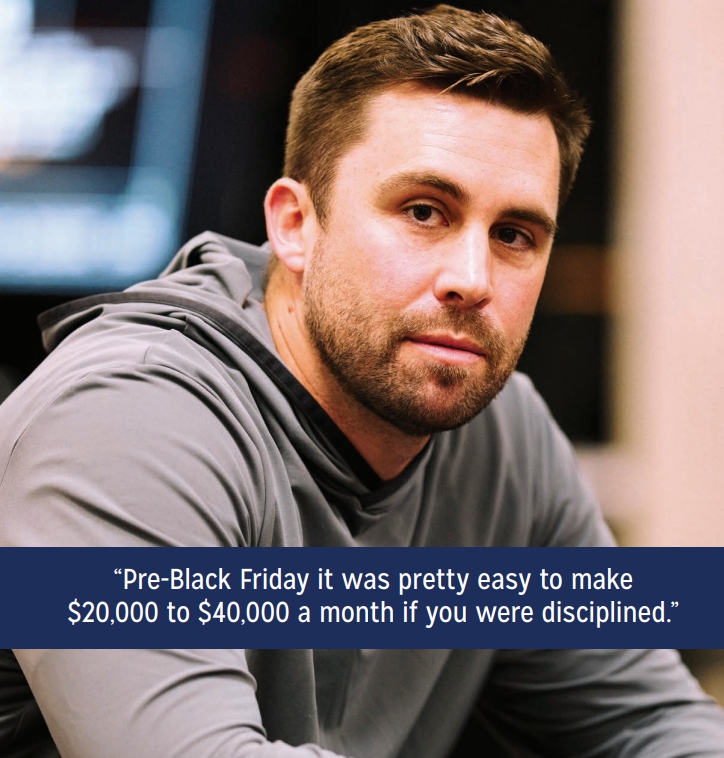
John Andress: Pre-Black Friday it was pretty easy to make $20,000 to $40,000 a month if you were disciplined.
Art Parmann: There were a lot of people on there gambling.
Justin Young: Were you responsible, bankroll-wise, or as a young guy at this time, were you spending money?
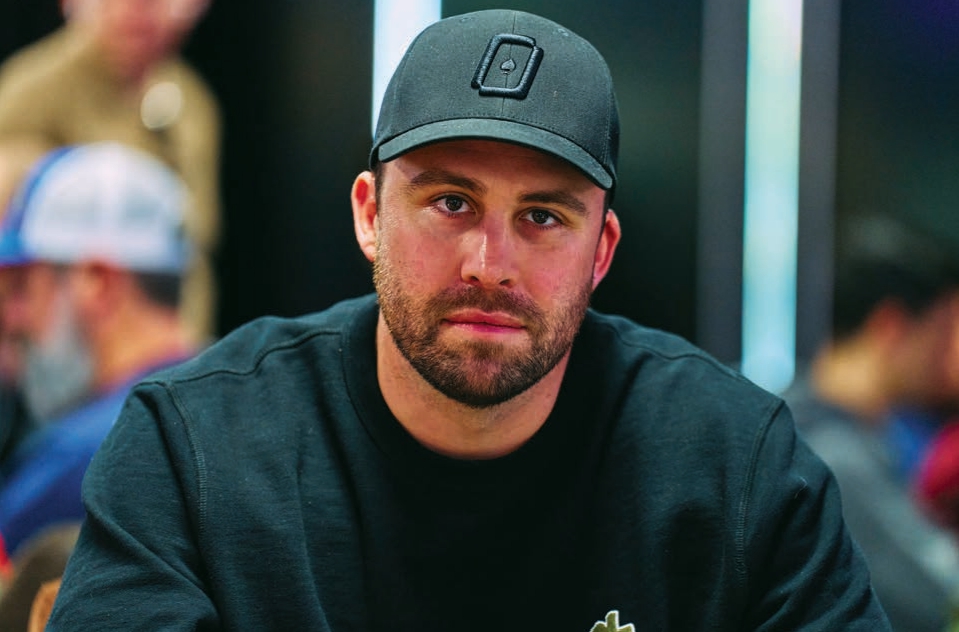
John Andress: I was never super strict, but I never went broke. There were times I’ve had 40% or 50% downswings. When Black Friday hit, I moved to Toronto and was there on and off for a year. That also went really well, playing online cash and tournaments. But eventually I just was sick of being in Toronto, and figured out a way I could play on PokerStars.
All my friends were living in New York City, and every time I visited I had a great time. I moved there, and that was more degen with the spending. I was doing pretty well in poker, but looking back, I was spending six figures a year going out and traveling. We would go out every Thursday, Friday, and Saturday night.
Justin Young: How were you looked at by those friends that had real jobs in the city?
John Andress: They looked at me as an outlier because I would be able to go out Thursday, and I’d be able to sleep until 2 p.m. and they were at their job at 7:30 in the morning, so they were jealous of that. A year in, another poker player moved in with us so they were around it all the time. I loved New York as a single guy then, but I felt like an outcast socially with people outside of my friend group. It’s just that same poker conversation, ‘What do you do? Oh, how do you win money?’ And especially in New York, the whole culture is work.
Eventually, Andress transitioned to the other side of the online game. That included the ins and outs of what goes into banning cheaters.
John Andress: I moved to the Bay Area, and there are a bunch of really good games there.
Justin Young: You must have met some cool people.
John Andress: That’s how I got into this job. Our CEO and CTO both played in an office game I played in, so I became close with them. They both had worked at startups together. In 2018, one of their previous investors bought this brand in Asia and was launching a poker site. So Conlan Ma, our CEO, went to work for him, and I started talking to him because at that point I’d played on the Asian apps. I’d kind of stopped playing because of the cheating issues. From playing on there and doing some analysis about the games, I had a pretty good idea of what was going on with the bots and collusion.
We started talking about some ideas. He asked me to work with our data science team to build bot detection tools. I think the first platform launched in 2018 and it grew super fast. Pretty much right away, we discovered a huge problem, like the Russian bot farms that you hear about. And then there was a bunch of pretty well-known high-stakes players playing short deck that were colluding.
I actually pulled in Nick Petrangelo and Seth Davies, and Ben Sulsky helped a little bit, and I helped clean up this problem as a consultant. Then we got to talking to our CTO about what we could do from the technical side. I flew out to Asia, put a proposal together for the investors, and then that’s kind of how that turned into a full-time job.
Justin Young: You’re not a tech guy. Your expertise is more on the poker side of this, where you actually see what’s going on behind the curtains without actually having to be behind the curtains.
 John Andress: I would describe my role as a product leader. But most of my focus is on the data science products, around collusion detection, bot detection, there are some other things we’ve done like skill prediction that we use to control access to the tables. I work with the technical people as a domain expert, to build these different products.
Justin Young: Were you actually hands-on coding?
John Andress: No, but I can write very basic SQL. I would put together the requirements from a poker perspective, whether it’s about game theory or describing what we need to do. They go back and do the feature engineering. We review all the outputs of the models and iterate on it in that way.
Then I work closely with the ops team on the actual security stuff, but I don’t like that as much. There’s been some crossover with people I know who get banned and it’s always awkward.
Art Parmann: How do you go from playing the app games to going, ‘Oh, there’s, there’s a problem?’
John Andress: Before I was working, when they bought the site, our CEO gave me access to the app. I was playing there a little bit. Then when I started doing the security stuff, I obviously wasn’t allowed to play anymore, but we would review the cases.
There was a big collusion case, and we were looking at all the hands and I was helping the team build the case. That’s a little more straightforward. You’re looking at how they usually play, and then what they’re doing when they’re sharing cards. Since a couple of the cases were pretty high profile, one of these guys that played private games with the owners of the company, we had to present the case to him.
Then we started talking about if there are technical solutions. Is something AI can help automate or solve? And then that’s when we came back, started this business entity, and started hiring. We can provide these solutions to their different platforms.
Justin Young: How much say do you have in that whole process? Was it just basically, this is the case. You guys do whatever you want with the information, or is it like, ‘I think this is very severe. I think you guys should take extreme measures here’? How much input do you have as far as the punishments go?
John Andress: Everyone has a boss, but they come to us for all the recommendations. If there was a situation where some VIP that somehow knew the owners of the company or a high-profile player… when I think through the decision-making process for this, it needs to be as close to 100% as it can. With a lot of the cases you always have the option to not confiscate the money and just ask them to leave.
Justin Young: What percent of doubt in your mind would you need to just ban them, but let them keep the money?
John Andress: I think it’s complicated because there’s always a bunch of evidence, and kind of like a scale how the legal system works. Maybe this happens more with the RTA (real-time assistance) and bot stuff. But there are certain indicators that they’re using something, but you can’t definitively prove it or mathematically prove it.
We have asked people to play on webcam. They don’t quite do what they were doing when they’re playing online, and they’re using something, but we can’t really prove it. So, we’re just going to ‘ask’ them to leave and let them keep the money.
About The Table 1 Podcast
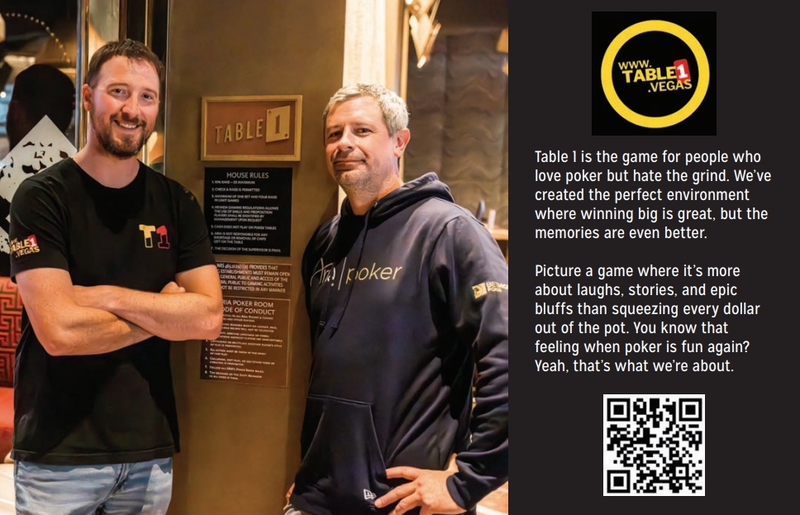
Hosted by high-stakes poker pros Art Parmann and Justin Young, the Table 1 Podcast is on a mission to make poker fun again. Tune in to see world-class pros talk poker, gambling, and all manner of life experiences on and off the felt. Visit the website for the podcast, newsletter, or even to get in the game. ♠
- Photos – PokerGO – Antonio Abrego