






Muck in Poker: Definition, Rules & How to Muck
What Is Muck in Poker?
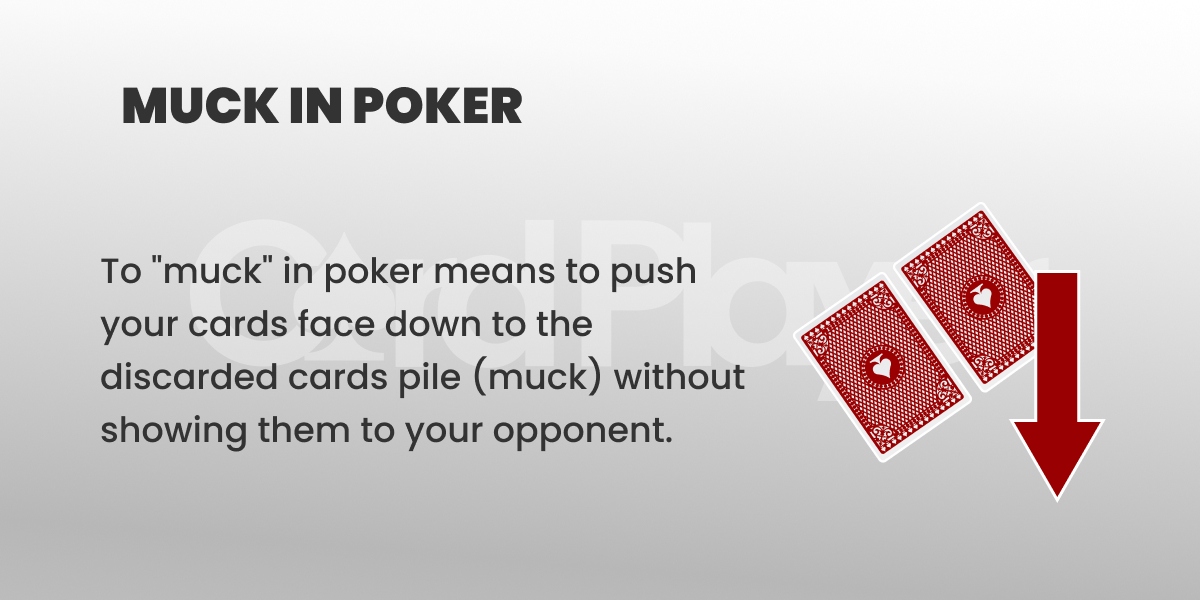
Muck in poker refers to two related concepts. Verb: to muck means to fold or throw away a hand without showing it. As a noun, muck” means the pile of burned and folded cards that is next to the dealer.
The hand is dead and can’t be picked up once it is pushed face down into that pile.
The action also speeds up the game because players don’t have to turn over cards they don’t need when they know they can’t win a pot. When thinking about muck vs. fold in poker, mucking your hand, sliding it to the muck, and folding are all essentially the same.
Muck in Poker: Key Points
- Muck can mean throwing away your cards face down so that your opponents can’t see them.
- As soon as your cards touch the muck pile, your hand is forfeited.
- Mucking keeps the game going and strategically protects information
Muck or Show in Poker
People often compare mucking to showing your hand.
When you show, you show your cards to the table. Mucking hides them, and the poker muck cards remain unknown to the rest of the players (games televised with a time delay allow home viewers to see the cards). Both approaches change the dynamics of the table, and each has a different goal.
Sometimes showing your cards can help you.
For example, if you are looking to appear more aggressive than you really are, you might show a bluff instead of mucking your hand.
Mucking, on the other hand, keeps long-term plans safe. If your opponents can’t see which hands you play or fold, it’s hard for them to interpret your actions. In online poker, auto-muck settings automatically muck your hand at showdown. They prevent your opponents from gaining extra information by examining your folded or discarded hands.
What you want to do will determine whether you muck or show.
People who value consistency or secrecy will muck more often. Those who want to change their image at the table or influence future table dynamics may occasionally reveal their cards. To achieve their goal, players must understand the rules of their game and how their actions will impact future hands in both cases.
Poker Muck Rules
Poker muck rules make sure things are clear and fair.
A properly mucked hand is pushed face down toward the dealer. The hand is forfeited as soon as the cards touch the muck pile. Dealers are taught to quickly pick up mucked hands and put them in the pile to avoid arguments.
Auto-mucking
Online platforms make it easier to sort through auto-muck options. These settings automatically fold losing hands at showdown or keep them hidden from your opponents. This protects new players and gives them time to learn how their hands are displayed in online poker games.
Position
Position can affect how you decide to muck.
A player in late position might show a hand from time to time to change how things will go in the future. For instance, a loose player might show a bluff to get other players to act. It’s safer to muck when you’re in early position because showing gives your opponents information they can use against you.
Etiquette
Most poker rooms only let players ask to see mucked hands in certain situations. This usually happens when there is a dispute that needs to be settled during an all-in. Asking to see mucked cards casually is not a good idea because it slows down the game and can cause problems.
A Beginner’s Guide to Muck Strategy
Understanding the poker muck meaning and when it is useful can help beginners make better decisions.
Basic Rules for Mucking
The easiest rule is to muck after you fold or when your opponent clearly has you beaten at showdown. Showing your losing hands won’t help you unless you want your opponents to see you differently. Only show your hands for certain strategic reasons if you’re a beginner. If you show a tight fold or a big bluff, it can change how your opponents play against you later. However, doing this too often can reveal more information than you intended. Here is a good rule to follow: fold face down, win with revealed cards, and keep everything else hidden.
Etiquette and Fair Play
A muck in poker strategy also includes good manners. Don’t slow-roll by acting like you’re not sure if you have a winning hand before mucking. Don’t try to hide important information by angle shooting. Make sure the action is clear and honest.
Game Format Considerations
The type of game also affects how people muck. Long-term image is important in cash games. Players who seem too loose might fold more often to hide weak hands. Tight players sometimes make a strong fold or call to keep their discipline. Players in tournaments often muck automatically to avoid giving away information at crucial times, such as when the bubble or pay jump is near.
Stack Size and Table Dynamics
The sizes of the stacks and the way the table works are also important. Short stacks don’t usually want to give away more information because their opponents might change their ranges based on what they see. Deep stacks make it more likely that showing will have a psychological effect, but even then, mucking usually gives you more safety.
Following these mucking principles will help you protect your strategy while maintaining proper poker etiquette at the table.
Common Mistakes When Mucking
Players who are new to the game can make mistakes with the poker muck:
- Accidentally mucking a winning hand: One such example is accidentally mucking a winning hand at the end of the game. If the cards hit the muck pile, the hand is dead, even if it was the best. Before giving up your cards, you need to be sure of the board and pot eligibility.
- Mucking out of turn: Another mistake is to muck out of turn. Throwing cards too soon can disrupt the game and inadvertently reveal information to your opponents. Players must wait until the action reaches them to make a choice.
- Unclear card disposal: Some players throw cards around in a way that makes it hard to tell if the hand is really folded. Slide the cards gently toward the dealer. Clarity maintains a fair game and protects the players.
- Slow-rolling before mucking: It’s also bad poker etiquette to slow-roll before mucking. A slow roll tilts your opponents by making them think that they still have a chance to win the pot because you are not sure if you will call or not.
- Thinking a muck can be undone: Lastly, beginners sometimes think that a muck can be undone. Once a hand hits the muck, it can’t be taken back. This rule prevents people from tampering with the cards and ensures that no one claims cards after they have been mixed with the rest of the pile.
Mucking protects your hands. It also stops your opponents from figuring out your betting strategy. Players avoid making mistakes and keep good table manners by knowing when to muck, when to show, and how muck rules work.
FAQs
What does muck mean in poker?
Mucking means throwing away your hand face down so that your opponents can’t see it. It can also refer to a stack of folded cards.
Can cards be retrieved from the muck?
If a hand touches the muck pile, it is forfeited and can’t be returned to the game.
What is auto-muck in poker?
Auto-muck is a feature on online poker sites that allows players to automatically hide losing hands at showdown or fold them without showing the cards.
What’s the difference between mucking and folding?
When you fold, you are out of the hand. Mucking is the way you throw away the cards. Most folds mean putting the cards in the muck.
What is the difference between show and muck in poker?
Showing your cards means turning them face up for other players to see. Mucking keeps them out of sight. Every choice has an effect on the table image and strategy.
Why do people muck in poker?
Players muck to protect their strategies, keep the game moving quickly, and not give away information.