
 Gambling author Michael Kaplan talks with professional sports bettor and poker player Alan Boston, who says that despite the spread of licensed and regulated sportsbooks, sharp gamblers are still taking their action overseas to illegal sites.
Some laws are made to be broken.
As I type these words, I think of surreptitiously smoked joints back in the day, a fake ID that got me into club shows as a teenager, and the NFL parlay cards that a guy named Maury used to pick up from my father before the Sunday games kicked off.
But not everybody knows a guy like Maury. There are more gambling options than ever before in the United States these days, with 39 states offering some form of legal sports betting. But that hasn’t stopped gamblers from finding action on illegal, offshore betting sites.
The Feds Want You Betting Locally
The FBI has issued a warning for gamblers who use these betting platforms, while acknowledging that they remain incredibly popular.
“These illegal sportsbooks and online gaming sites have significant consequences for the American public, the U.S. economy, and the integrity of sports betting in the U.S.,” the notice warned. “Individuals engaged in illegal gambling risk funding organized crime activity and becoming vulnerable to violence, extortion, and fraud.”
But will anyone really listen? Probably no more than my father would have heeded scoldings in regard to the dodgy parlay cards that he loved.
An estimated $673.6 billion is said to go through illegal and unregulated markets each year, according to the American Gaming Association.
Going Offshore Is A Must For The Sharps
For recreational bettors, gambling with offshore sites might be a convenience. But for sports betting pros, it can often be a necessity.
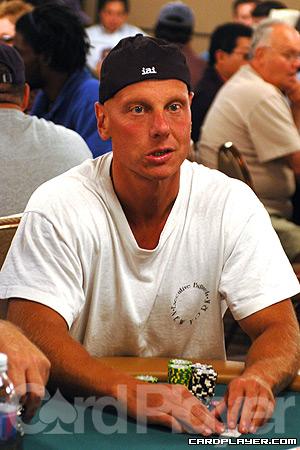
Alan Boston
Take Alan Boston for example, who palled around with Stu Ungar and used to handicap for Billy Walters. The professional sports bettor and seven card stud standout said that offshore sites offer the kind of volume and smaller edges that sharp gamblers are looking for.
“If you’re a professional, betting any kind of volume, you or someone [working with you] has to bet offshore,” Boston told Card Player. “If you’re trying to bet big money, you need offshore outs.”
You really need the outs if you happen to be a winning bettor who gets down for a living. Have too many good weekends and the legit sportsbooks in the United States won’t want your business anymore.
When The Pros Win, The Books Quit
In the typical casino vs. advantage-player move, the house curtails you for being too good.
“They don’t know what they’re doing; they don’t know how to book,” Boston exclaimed. “If you’re a smart bookmaker, you should want the action of sharp people. They help you get to where the market price should be. From there, you can write action on both sides.”
For the gambler, however, getting action on one side is tough when the books will limit what you can bet. Officially, it’s not a backoff. But, for all intents and purposes, when you make your living by betting large, it may as well be a backoff.
Referencing two major online gambling sites, Boston said, “I started out betting $1,000 a game and eventually” – because he won – “I could bet only $50. They cut me down to $50, which is ridiculous.”
 Boston said options are better in the Caribbean.
“You can go and get hooked up with a bunch of island sites and bet $5,000 at four different places.”
Punting On Purpose
For those who can’t or won’t go offshore, or who are just looking for opportunities closer to home, as always, crafty advantage players have carved out workarounds.
“They dump off a bunch of money, making correlated parlays, you know, total sucker bets,” said Boston. “They go in, bet thousands, and the algorithm deems them a whale. Then they can bet whatever they want for a long time. So, you sacrifice the thousands to rob them for, you know, maybe six months. That’s kind of cool.”
The irony there is that the bettor gets what he wants, albeit for an up-front price, and the sportsbook loses out on benefiting from the knowledge of sharp gamblers.
Asked why they don’t want the knowledge, Boston replied, “Because they’re morons. Most people are morons.”
He hesitated, then added, “You haven’t figured that out yet?”
 Michael Kaplan is a journalist based in New York City. He is the author of six books including Advantage Players, and has worked for publications that include Wired, GQ and the New York Post. He has written extensively on technology, gambling, and business — with a particular interest in spots where all three intersect. His article on Kelly “Baccarat Machine” Sun and Phil Ivey is currently in development as a feature film.