





User Name Password  

HOME  
 
MAGAZINES
 
POKER NEWS
 
TOURNAMENTS
 
MULTIMEDIA
 
ONLINE POKER
 
TOOLS & TIPS
 
SUBSCRIBE
CARD PLAYER MAGAZINE
  • CURRENT
  • ARCHIVE
  • AUTHORS
  • SUBSCRIBE
 
CARD PLAYER EUROPE
HEADLINES
 
BLOGS
  • GUS HANSEN
  • ROY WINSTON
  • DANIEL NEGREANU
  • PHIL HELLMUTH
  • DOYLE BRUNSON
  • LEE WATKINSON
 
GAMBLING LEGISLATION
 
HISTORY OF POKER
SCHEDULE & RESULTS
 
PLAYER DATABASE
 
PLAYER OF THE YEAR
 
WSOP
 
WPT
 
NBC HEADS-UP
 
POKER SUPERSTARS
PHOTOS
 
CARDPLAYER TV
 
HAND REPLAYER
 
CP AUDIO
 
POKER MEDIA STORE
 
POKER DOWNLOAD STORE
CARD PLAYER POKER
 
ONLINE TOURNAMENTS
 
ONLINE ROOM REVIEWS
 
ONLINE PLAYER DATABASE
 
ONLINE POKER BEAT
CARD PLAYER PRO
 
POKER ROOM FINDER
 
RULES OF POKER
 
POKER ON TV
 
WEBMAIL
 
FORUM
 
ODDS CALCULATOR
 
POKER ANALYST
26 ISSUES FOR $19.95
 
GIFT SUBSCRIPTION
 
POKER STORE
 
CARD PLAYER EUROPE
 
SUBSCRIPTION SUPPORT
 
RENEW SUBSCRIPTION
 
 
Friday May 09, 2008
published: 60 days ago

Card Player Profile: Erik Seidel

BY: LIZZY HARRISON | lizzy.harrison@cardplayer.com

PUBLISHED: Friday May 09, 2008 05:00 PM

Share this article with a friend


of


close
Talks About His Recent WPT Win and His Beginnings in Poker


Erik Seidel upon winning his first-ever WPT title Erik Seidel currently sits in first place in the Card Player Player of the Year race with 3,700 points. His recent World Poker Tour victory at the Foxwoods Poker Classic, where he earned just under $1 million, is one of the reasons that he is leading the pack. His runner-up finish in the Aussie Millions, where he went deeper than 778 other entrants, also contributed to him holding the top spot. Throughout Seidel’s poker career, which began about 20 years ago, he has accumulated a whopping eight World Series of Poker bracelets. His skills and patient nature at the poker tables have lined his pockets with more than $8.7 million in tournament poker winnings.


Lizzy Harrison: You are currently eighth on the lifetime tournament poker winnings list. When you first took up the game, did you ever imagine such success?

Erik Seidel: Not really. When I first started playing poker, I did not even think about playing tournaments at all. There really weren’t that many tournaments; the World Series was the only big tournament at the time. When I started playing, though, the World Series was not even on my radar. I definitely did not think that I would ever play in it. It wasn’t until a few years after I began to play poker that I started to believe that maybe I could play it.

LH: You began your professional career as a backgammon player. When did poker peak your interest?

ES: I knew Stu Ungar, Chip Reese, and Puggy Pearson because all of them played backgammon. Another friend of mine, Eddie Green, also played. Seeing those guys play poker is what got me interested.

LH: Were you a winning player from the beginning?

ES: I remember winning the first time that I played, and maybe that was part of the problem [laughing]. When you win the first time, you start to think that you know what you are doing. But I didn’t; I was really, really bad at the beginning. It took me several years to get any kind of idea about how to play. I definitely did not have the accelerated pace that I see in some of the young kids today. Some of them adapt very quickly and are up to speed within six months or a year.

LH: When and how did you improve?

ES: I bought this little [David] Sklansky pamphlet that, at the time, cost $3. That was the original text that taught me a bit about limit hold’em. I also bought Doyle [Brunson’s] book [Super/System] pretty early on. Then, I went out to Vegas for a backgammon tournament, and while I was there, I played limit hold’em. When I got back to New York, I started to play more poker at the Mayfair Club with a couple of my friends. We played heads up and shorthanded to try to figure out the game.

LH: Were you playing poker seriously at that point?

ES: Not really, it was a fun gambling thing to do. I wanted to see if I could play. Then, I found out about little tournaments in New York at people’s houses. I don’t remember how long it took me to decide I wanted to play in those tournaments, but I did. I knew Z [Steve Zolotow] at that time, and he was very successful on the New York tournament circuit. He was the player of the year; I think it was two years in a row. I was very impressed with that.

LH: The first major tournament you ever played was the WSOP main event in 1988, when you finished second to Johnny Chan. How prepared were you, going in?

ES: By that point I had been playing a lot at the Mayfair, so I was an experienced live player. I had already done very well against some very good players. One of those players was Howard [Lederer], and he was the one who told me that I should think about going out to play in the World Series. He and [Dan] Harrington had been out the year before [1987], and they had both made the final table of the main event. Their encouragement convinced me to play the main event in 1988. I ended up going out and selling lots of pieces of myself in order to play that first year.

LH: What do you think about the final table delay that has been implemented for the upcoming main event?

ES: I am very concerned that it changes the entire dynamic. If you are one of the excellent players at the final table this year, the less-experienced players will have four months to close the gap. In that sense, it really changes what the tournament has historically been. I think that Harrah’s has done a tremendous job in terms of marketing the World Series, but I would like to see some consideration given to the players. Something like reducing the fees or adding money to the prize pool would be good. There is an awful lot of money being made, and I think that it would be very nice if some of that money made it back into the prize pool.

LH: If you had had four months to prepare before you played Johnny Chan heads up, do you think that would have changed the outcome?

ES: It would have definitely been very different, and I would have been way more prepared. I don’t know that it necessarily would have changed the outcome, but it certainly would have given me a better chance to win, particularly in those days, because that final table was all pros; it’s a little different now [laughing]. Now, you have people who are really inexperienced playing tournaments like the main event and somehow finding their way through because the fields are so big. The idea that somebody can now hire a great player to coach them every day for four months before they play the final table changes everything. There is a lot of money at stake, and to be able to, essentially, learn how to play poker from the best players just levels the field. It creates an entirely different situation than what we had before. I certainly see what they are going for in terms of creating more noise about the World Series. I understand how they thought about it and came up with this idea, but if they are going to actually do this, which they are, it seems to me that there should be some money given back. Some consideration has to be given to the players.

LH: The WSOP is rapidly approaching. Have you decided which tournaments are must-plays for you?

ES: The only ones I know for sure right now are the first one [World Championship Pot-Limit Hold’em] and the last one [the main event]. Then there are all kinds of tournaments in between that I am not really sure about. It will depend on how I am feeling and what I think my chances are. I am not really in love with the schedule this year, because there are lots of tournaments that I would like to play but will have to pass on. I won’t be able to play them, because if there is a $5,000 tournament one day, then I pretty much have to take off the day before. It is hard for me to do that. I don’t focus too much on schedules, but, just looking it over, I am concerned with the amount of good tournaments, tournaments that I would love to play, that I am going to have to skip.

LH: At the beginning of the year, you were the second-place finisher in the Aussie Millions main event. Now that you have had time to reflect on the tournament, does anything jump out at you that you wish you would have done differently?

ES: Oh yeah, that is the beauty of poker. When you get knocked out of a tournament, you can look back and think about how if you had played a hand a little bit differently the result would have been different. At the Aussie Millions, there was one critical hand where I could have committed all of my chips with a marginal hand when I thought my opponent was bluffing. I decided that the play I was contemplating was too crazy, and I didn’t make it. If I had gone with what I thought at the time on that one key hand, if I had pulled the trigger, Alex [Kostritsyn] would have been in very bad shape. He would have had very few chips left. I don’t know if I would have won from there, but I do know that my chances of winning would have been much greater.

LH: What did you have in that hand?

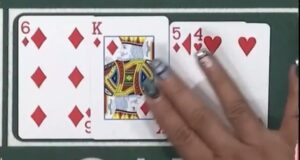
ES: I think that I had either 6-6 or 4-4 and the flop came K-K-J. I had raised before the flop and he had reraised. He bet the flop, but I just thought he did not have it, so I raised him. Then he reraised me and, by doing so, committed a lot of his chips. It was an odd situation, because it is pretty unusual for somebody to put in another raise in that spot. It did not sit right with me, because I just did not think he had it. After the hand, he showed me that he had A-10; it was a bluff. That was really the key hand of a pretty interesting match. He is a very good player, so it was not one of those times when I thought that I should have won; it was a tough battle. It was a very close match, and I was actually lucky to get back into it, because he started off with a big chip advantage.

LH: Your most recent win was also your first WPT title. You entered the final table with the chip lead and never relinquished it; what strategies did you employ to do that?

ES: It was a crazy table, so I was really trying to keep the pots as small as possible. I wanted to pick my spots and stay out of the way the rest of the time. I basically waited for good situations to come up. I was still forced to take some risks, though, because there is no “no risk” strategy. I was just trying to lower the volatility at the table, because the chips were really moving around to a lot of different seats.

LH: How do you play as patiently as you do, and what do you take into account before you enter a pot?

ES: It is hard to say exactly, because it is all situational. It will often depend on somebody’s chip stack or my own chip stack. It also depends on my position and who the other player is that I am playing against. I am probably more likely to play a pot with a player who think is less experienced. I would play more pots against somebody like that than I would against somebody who is a great player.

LH: How did you stay focused for the lengthy 12-hour final table, and did you anticipate it taking that long?

ES: When I sat down, I thought to myself that I had to be ready for a marathon. I knew that I had to be prepared for a long match, but I was certainly surprised about how long it actually took. I would never have thought that it would go for 12 hours. It didn’t feel like that, though, because when you are playing, you are just thinking about finding good plays. I was very happy with my performance, because sometimes I have trouble with energy, especially toward the end of tournaments. Before that final table, though, I had slept well, and I got a massage. I was ready, and I felt like I could have played another 10 hours.

 
 Prev | Page 342 of 3222 | Next 
 
 
Messages that harass, abuse or threaten other members; have obscene or otherwise objectionable content; have spam, commercial or advertising content or links may be removed and may result in the loss of your MyCardPlayer ID (including e-mail). Please do not post any private information unless you want it to be available publicly. Never assume that you are completely anonymous and cannot be identified by your posts.


The Scoop: Phil Galfond:
Card Player TV's "The Scoop" with special guest Phil Galfond.
 
Strategy: Barry Greenstein:
Card Player TV sits down with 2004 no-limit 2-7 draw champion Barry Greenstein to discuss strategies for the game.
 
High Stakes Living: Tony Rivera, Mark Newhouse and Friends:
Card Player TV tours the home of Tony Rivera, Mark Newhouse and friends.


1 day ago
WSOP: Main Event Day 1D
about 6 hours ago
SpadeClub Update: World Series $40K Giveaway Champions
about 6 hours ago
Full Tilt Announces August FTOPS IX Schedule
about 10 hours ago
New WSOP Circuit Dates Released
 VIEW POKER NEWS ARCHIVES
 
 
Jul 08, 08
Shannon Shorr
Complete Recap of Bellagio 3000 Win
 
Jul 08, 08
Padraig Parkinson
Inspiration from Stu
 
Jul 08, 08
Pro Analysis
Losing Never Felt So Good - Q&A with Bill Gazes
 
Jul 08, 08
Lee Watkinson
Post WSOP blues
 
Jul 07, 08
Gus Hansen
102,900 - Off to a Good Start
 
Jul 07, 08
Mike Matusow
Ask the Mouth: Out of debt, best prop bettors, David Singer...
 
Jul 06, 08
Phil Hellmuth
The big arrival
 
Jul 04, 08
Doyle Brunson
DOYLISM OF THE DAY: "When things go wrong, don't go wrong with them."
 
Jul 04, 08
Roy "The Oracle" Winston
My WSOP Ends
 
Jul 04, 08
Behind the Scenes on the Tournament Trail
American Pastimes
 
Jul 04, 08
Dani "Ansky" Stern
Main Event, day 1 report
 
Jul 04, 08
Daniel Negreanu's Blog
Ding Ding Ding 2008
 
Jul 02, 08
Alec Torelli
Complete Degen
 
Jun 29, 08
Justin "WPTHero" Rollo
Back to MA from Vegas (for a bit)
 
Jun 18, 08
Chris "tribefan9" Rhodes
Vegas Recap
 
Jun 07, 08
Isaac "Ike" Haxton
Another good day
 
 VIEW ALL BLOGS


Home | Advertise with Us | Customer Support | Subscription Support | News & Press | Contact Us | About Us | Terms of Use | Privacy Policy
Site Map | Copyright © 2001-2008 CardPlayer.com, All rights reserved.  Visit our Support Center to send us feedback
Card Player encourages you to gamble responsibly. If you or someone you know has a gambling problem, call 800.522.4700 or go to: www.ncpgambling.org. U.S. Citizens Please Note: The information contained at this site is for news and entertainment purposes only. Any use of this information in violation of any federal, state, or local laws is prohibited. Caveat: It is now a felony to play online poker in the state of Washington.